Pinterest SEO for Ecommerce A pin is one impression. A board is the thing that ranks.
Pinterest answers a search with boards as well as pins, and a board is what keeps somebody browsing your catalogue instead of leaving after one image. Most stores pin continually into five vague boards, so nothing accumulates and every pin starts from zero. That is the gap this work closes.
 Save
pin title
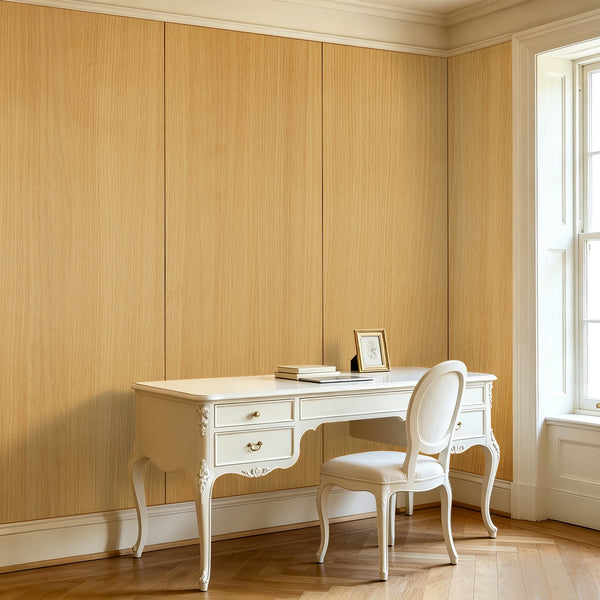
Oak paneled study wall
Save
pin title
Oak paneled study wall
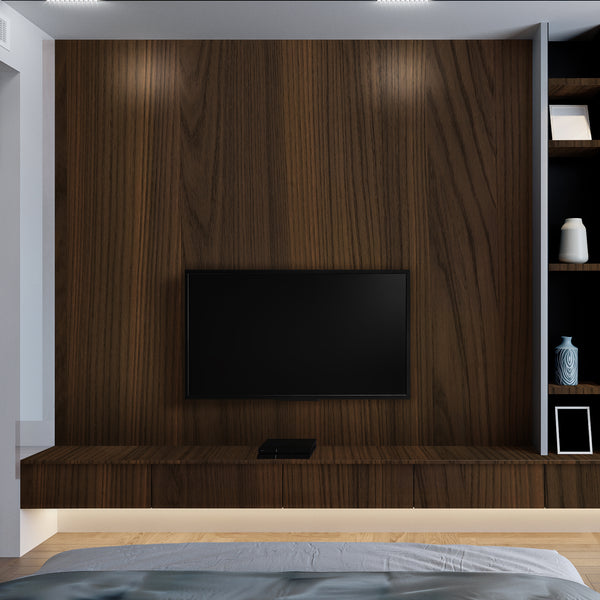 Walnut media wall
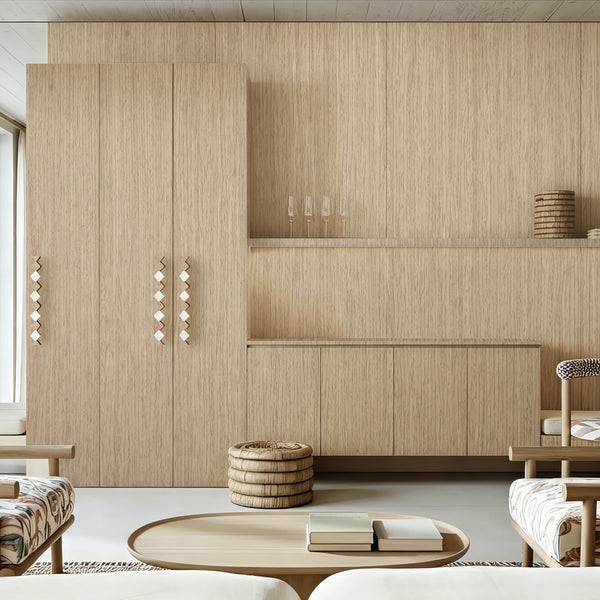 Wood grain film for cabinets
 Smoked black oak wall
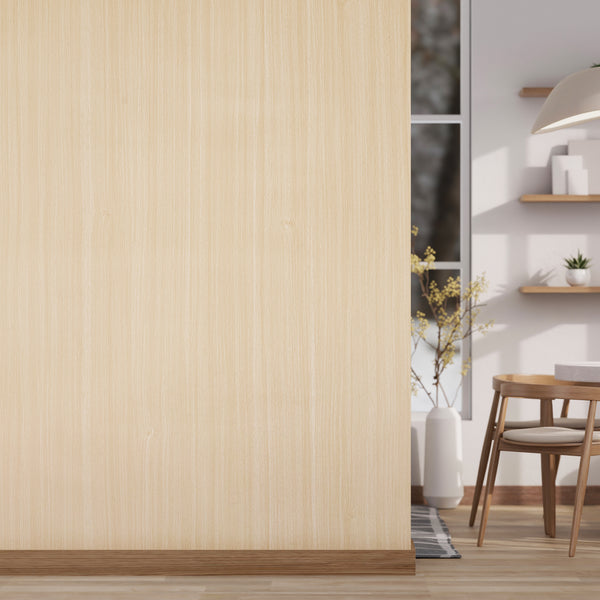 Light ash wall panels
 Wood grain film for shelves
The strongest field. The phrase a buyer types, in the order they type it. Pinterest weighs it most, and it is the one most stores spend on a slogan.
Read as plain text. One sentence saying what the board collects and who it is for, carrying the term and the phrases next to it in the bank.
Carried onto the image. Each pin is mapped to a term in the bank and its title carries that term, so the pin earns a search rather than inheriting one.
Structure first. Pins last.
Nothing gets pinned until the board set matches what you actually sell, and until every board carries the words a buyer types to find it.
Pinterest search
board matched-
Wood Grain Film
yourstore
- Wood Panel Inspiration a blog
- Home Reno Ideas another shop
The term is in the board title, the description and the pin copy, so the board is eligible for the search rather than only for whoever already follows you.
Saves, not views
keeps workingA save files your image onto somebody else's board while they plan. A board built around a real search keeps collecting them long after the pin went up.
Google image pack
image eligible
Pinterest boards and pins are public pages, so the images on them are eligible for Google's image row. The same photo, captioned once, competes on a second search engine for free.
Almost nobody searches
Pinterest by brand name
This is the whole case in one figure. Both numbers below come from Pinterest's own pages, and both are linked.
of top searches on Pinterest are unbranded. People search for the thing, not for the shop, which means the words on your boards decide whether you are in the result.
Pinterest Business, audience pagePins saved every week. A save is not a view: it files your image onto somebody's own board, where it keeps working while they plan.
Pinterest Newsroom, company factsAn unbranded search is an open one. Nobody is asking for you by name, so nothing about your reputation gets you into the result and nothing about your obscurity keeps you out. What decides it is whether a board of yours is about the thing that was typed.
Five boards and a posting habit
is not a structure.
Pins go into whichever board is closest, the boards are named after the brand rather than after anything a buyer types, and no board ever builds enough signal to rank. The pinning is real work. The structure underneath it is missing.
Five boards named after the company. None of them is the answer to anything a buyer types.
Signal spreads thin across boards that share no subject, so no board builds enough of it to rank.
The exact thing your catalogue is full of. Pinterest looks for a board that is about it.
A board named after the search wins the search. Yours is called Inspiration.
The pinning was never the problem. There was nothing underneath it for the pinning to build up.
The catalogue map
Every board and every keyword is grounded in what your store actually sells. The categories come from your own collection names, not from a template that assumes every store sells the same thing.
- Five to nine buyer-facing categoriesBroad hubs read out of your real collection names, not one category per collection. A store with hundreds of collections still gets a category set a person can hold in their head.
- Every collection lands in exactly oneNone omitted, none counted twice. A product line distinct enough to stand alone keeps its own category instead of being buried in a generic bucket.
- What you sell, and what you do notA store can sell the tools for a job without selling the material. The map records both, and everything downstream is checked against it.
- You confirm the map firstWe hand you the categories before a single board is named. You correct what is mis-filed. Nothing runs on a wrong map.
- yourstore.com niche: craft and interior vinyl film
- Adhesive craft vinyl
- Printable and sticker paper
- Heat transfer vinyl
- Interior film
- Custom stickers and DTF
- Tools and accessories
- Starter kits
- Craft blanks
8 categories, every collection filed under exactly one, none left out
- wood grain filmnames a product you sell
- wood grain film for cabinetsan application of your product
- replacement cabinet doorsrejected: you do not sell them
A store can sell the tools for a job without selling the thing the job is done to. The map records both, so no board is ever named after something you do not stock.
The board set
One board per collection is a filing cabinet, not a Pinterest presence. Boards get built along the axes people actually browse by, and your catalogue decides which of those axes exist.
- Nine shapes, worked in roundsA hub per category, then finish, color, splitting the oversized categories, use case, audience, what it goes on, choosing and comparing, and seasonal. Each round asks a different question of the same catalogue.
- Only the axes your catalogue hasA store with one finish gets no finish boards. A niche with no genuine gifting season gets no gift guides. The rule in the generator is to return nothing rather than invent an occasion.
- Named the way a buyer browsesBoards are named for the thing being changed or the person doing it, not for your brand. Someone planning a room searches for the room.
- Big categories get splitOne board covering an entire category is a board nobody follows. Oversized categories are broken into the sub-hubs their own collections suggest.
Wood grain interior film on cabinets, furniture, shelves and wall panels. Oak, walnut and ash, cut and smoothed over what is already there.
Marble and stone film on countertops, backsplashes and table tops, cut around sinks and taps without replacing the surface.
Soft touch matte film on drawer fronts and cabinet doors, for the finish that does not show fingerprints.
Each round asks a different question of the same catalogue. The rounds with nothing to say return nothing: a store with one finish gets no finish boards, and a niche with no real gifting season gets no seasonal guides.
Board titles
The board title is the strongest text field Pinterest reads about a board, and it is the one most stores spend on a slogan. It should be the phrase a buyer types.
- The search phrase, not the sloganWhat somebody types, in the order they type it. Clever board names are invisible to the one system that decides whether the board appears.
- One idea per boardA title that covers three things ranks for none of them. If a board needs an "and" in its name, it is two boards.
- Readable at thumbnail sizeBoard titles are truncated in the grid. The words that matter go first, before the cut.
- Consistent vocabulary across the accountThe same category words on every board, so the profile itself reads as being about the thing.
ranks for nothing anybody types
Nobody searches Pinterest for your products. They search for the room they are about to change. A board named after the company is reachable only by people already on your profile.
ranks for wood grain film 3,600 est.
One idea, in the words a buyer types, with the part that matters at the front where the grid truncates. The same photographs, now reachable by people who have never heard of you.
Board descriptions
The description is the second field Pinterest reads, and the one place you can say plainly what the board collects and who it is for. Most are empty.
- A sentence, not a tag cloudWhat the board collects and who it is for, in plain words a buyer would also type. Stacked keywords read as spam to a person and add nothing for the index.
- The board keyword plus its neighborsThe term the board competes for, and the two or three phrases that sit next to it in the bank.
- Written per board, never reusedThe same paragraph pasted onto twenty boards tells Pinterest those twenty boards are the same board.
- Says who it is forBeginner or trade, interior or vehicle, gift or project. The qualifier is often the whole difference between two searches.
The second field Pinterest reads about the board, left blank. The title is carrying the whole board on its own.
Eight ways of saying one thing. A reader bounces, and the repetition adds no term the title did not already carry.
A sentence a person would read, which happens to carry the board term and the three phrases sitting next to it in the bank. It also says who it is for, which is often the whole difference between two searches.
The keyword bank
For each category, the visual buyer-intent phrases people search on Pinterest, in three tiers, because a Pinterest search sits somewhere between browsing and buying and the tier tells you where.
- Three tiers per categoryGeneric, collection and subcollection. Generic terms are how somebody arrives, subcollection terms are how somebody buys, and a board set needs both.
- Each term maps to a real collectionEvery keyword records the collection it derives from, so a term can never drift away from a product you carry. The tier says which board it belongs on.
- Visual phrasing, not Google phrasingPeople search Pinterest for a look. The phrasing is shorter, more visual and more often a noun phrase than the long question form that works on Google.
- Estimated demand, marked as an estimateEach term carries an estimated monthly volume so the bank can be worked in order. It is an estimate and it is never presented as a measurement. The screen beside this is a live client bank, so every term and figure on it is real.
| Keyword | Type | Est. volume | Cover |
|---|---|---|---|
| Generic · 8 | |||
| interior film | product | 2,400est. | covered |
| adhesive film | product | 1,900est. | cover |
| Collection · 12 | |||
| wood grain film | product | 3,600est. | covered |
| marble film | product | 3,200est. | covered |
| Sub-collection · 8 | |||
| wood grain film for cabinets | product | 1,400est. | cover |
| marble film for countertop | product | 1,300est. | cover |
Generic terms are how somebody arrives while they are still planning. Sub-collection terms are how somebody buys. A board set needs both, and the tier is what tells you which board a term belongs on. Every keyword and figure on this screen is real, taken from a live client bank. The volumes are estimates, never measurements, and two rows are shown per tier out of the counts in the section headers.
Pin titles and descriptions
A pin inherits some of its board and earns the rest. The title and description are where the term the board is competing for gets carried onto the image itself.
- The board keyword, in the pin titleEach pin is mapped to a term in the bank, and the title carries it. A pin titled after the file it came from carries nothing.
- A description that describesWhat is in the image, what it is made of, and what it is for. Pinterest reads it, and so does the person deciding whether to save.
- One pin per open termRepeats of your best-performing pin compete with each other. A new term is a new search you were not in.
- Linked to the collection, not the homepageSomebody who saved a pin about a finish should land on that finish, using the collection work covered elsewhere on this site.
The photograph is fine. Everything Pinterest could read about it is a camera file name and a homepage link, so it carries nothing into any search.
Save
The pin earns its own search instead of inheriting the board's, and the link lands on the collection it is about rather than the homepage.
The plan you approve
Boards are suggested, not imposed. Every suggestion is either accepted into the plan or dismissed, and a dismissed board stays dismissed.
- Accept or dismiss, board by boardThe generator proposes along one axis at a time. You keep what fits the business and drop what does not.
- Dismissed means never suggested againA dismissed board is kept on record rather than deleted, so the next round knows to avoid it. Deleting the name is what makes a generator cheerfully suggest it again next week.
- The plan is the briefWhat you approve becomes the board list, the titles, the descriptions and the shot list. There is no second document.
- Re-read as the catalogue changesNew collections add categories and new categories add boards. The map and the bank are re-read, not rebuilt from scratch.
- Wood Grain Film category in the plan
- Marble Film Ideas finish in the plan
- Soft Touch Film finish in the plan
- Interior Film for Renters audience in the plan
- Christmas Kitchen Decor seasonal dismissed we carry no holiday range
- Replacement Cabinet Doors use case dismissed we do not sell doors
A dismissed board stays on record so the next round knows to avoid it. Delete the name instead and the generator suggests it again next week, you say no again, and the same question gets asked forever. What you approve becomes the board list, the titles, the descriptions and the shot list. There is no second document.
Coverage, not cadence
The question is never how often you pin. It is which searches in your category have a pin from you, and which are still open. That list is the shot list.
- Every term in the bank has a stateCovered, with the pin that covers it, or open. The bank is worked in order rather than in whatever mood the week is in.
- Open terms drive what gets shotWhat gets photographed next is the top open term, not whatever is trending. The schedule writes itself.
- Boards accumulate, pins do notA pin has one moment. The board it sits on keeps collecting saves for the term it is built around, which is why the structure matters more than the frequency.
- Nothing here is a promised resultCoverage is something we can count. Rankings and saves are not ours to promise, so this page does not.
-
wood grain film
3,600
covered
-
 marble film
3,200
covered
marble film
3,200
covered
-
interior film
2,400
covered
- + adhesive film 1,900 open next to shoot
- + soft touch film 1,400 open
- + wood grain film for cabinets 1,400 open
The highest open term in the bank, not whatever is trending. Three covered, three open: the schedule writes itself. Coverage is something we can count, which is why it is the number this page reports and rankings are not. Every figure in this column is from this store's own bank.
Three readers, one board
Every board is read three times, and a board built as a place to dump pins satisfies none of them.
Reads the board title, the description and the pin copy. If the term is in none of them, the board does not exist for that search.
Arrives planning rather than buying, and is looking for a hub to come back to. A board about one clear thing is followable. A board about everything is not.
Saves are the signal. A board built around a real search gets saved by people searching it, which is what carries the pins beyond search.
Same catalogue.
Eight different decisions.
No new products and no bigger following. What changes is what gets decided before anything is pinned, and every one of those decisions is a section above.
Every row is a decision, not a result. There are no save counts or rankings here because the account in these mocks is one we made up, and a number we cannot source is worth nothing on a page about being findable.
What people ask before starting
Is Pinterest worth it if we are not a home or fashion brand?
Do you design the pins?
How many boards will we end up with?
Do we need to pin every day?
Find where AI can cite your store
Six engines, your gaps, and what to do next. Or talk to a human.
- Google AI
- ChatGPT
- YouTube
- TikTok
- Meta AI